.png)

Canastra Cheese | Its history and secrets of production
- Jun 9
- 6 min read
In the heart of Minas Gerais, Canastra cheese tells a story of mountains, family farms, and traditions passed down through generations. This soft, aged cheese, produced in the Serra da Canastra region, is today one of the most powerful symbols of Brazilian gastronomy. When traveling, tasting it in its natural habitat is like discovering a true piece of living heritage.
As travelers, you're not just tasting a dairy product; you're entering the world of a region shaped by livestock farming, high-altitude pastures, and rural hospitality. What if discovering Canastra cheese became the central theme of your next ecotourism trip in Minas Gerais?
Canastra Cheese: History, terroir and a journey through the Serra da Canastra
The history and production of Serra da Canastra cheese
Origins of Canastra cheese and cultural heritage
Canastra cheese, heir to a long tradition of expertise
Canastra cheese originated in the eighteenth century, during the gold rush in Minas Gerais. Portuguese settlers in the region adapted their cheesemaking techniques to the local terroir. Canastra is thus a distant cousin of São Jorge cheese produced in the Azores, from which it borrows the concept of a pressed, uncooked cheese, but with a distinctive flavor characteristic of the Brazilian mountains.
Historically, this cheese was not an everyday item. Families primarily prepared it for special occasions, such as welcoming a religious authority, a member of royalty, or a local captain. The cheese was then both a symbol of prosperity and a gesture of honor toward the guest. This symbolic dimension is still felt today in the pride of the producers when they offer you a taste of their cheese.
Over time, the practice has become so deeply rooted that it has become a defining characteristic of Minas Gerais. In 2008, the cheesemaking methods of Serra da Canastra were recognized as part of Brazil's historical and cultural heritage by the National Institute of Historical and Artistic Heritage. In 2012, Canastra cheese was granted Geographical Indication status. And in 2024, the traditional methods of artisanal cheesemaking in Minas Gerais were inscribed on UNESCO's Representative List of the Intangible Cultural Heritage of Humanity.
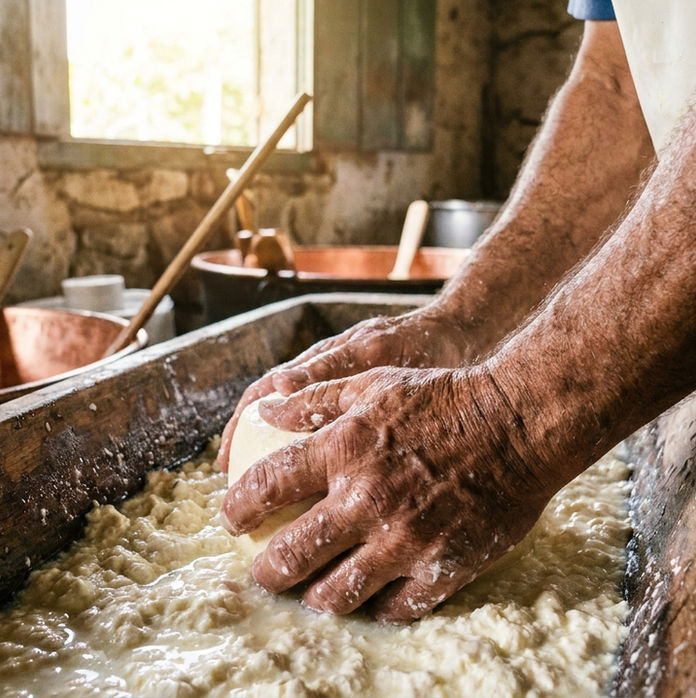
When you visit a queijaria while travelling, you are not just making a gastronomic stop; you are entering a world classified as intangible heritage, where producers perpetuate gestures that have existed for more than two centuries, in full harmony with the rural identity of Minas Gerais.
A unique terroir in the Serra da Canastra
The terroir of Canastra cheese in the Serra da Canastra
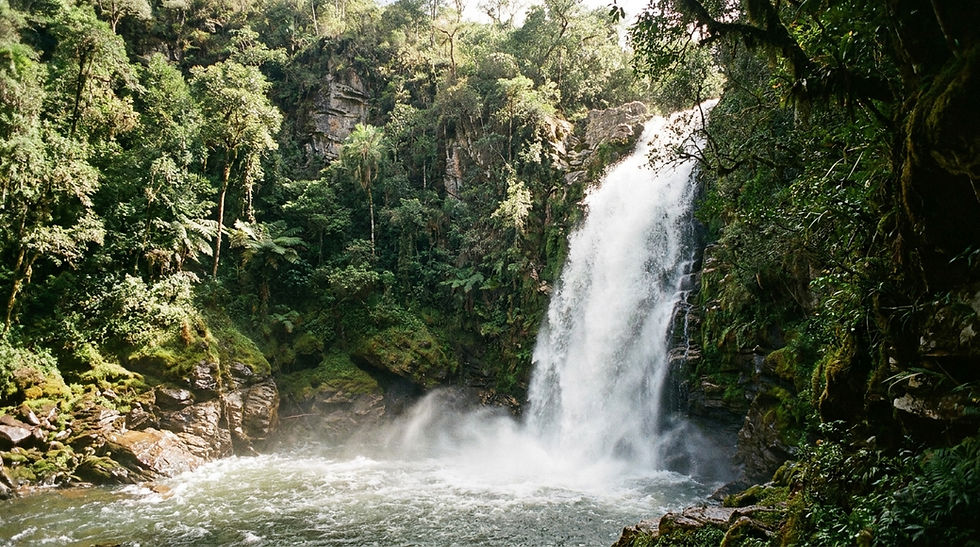
Serra da Canastra cheese cannot be understood without its environment. The terroir is located in western Minas Gerais, in a region of mountains, plateaus, rivers, and spectacular waterfalls. The climate, altitude, and the quality of the pastures and water shape the cheese's character.
The area officially recognized as a producer encompasses seven municipalities: Bambuí, Delfinópolis, Medeiros, Piumhi, São Roque de Minas, Vargem Bonita and Tapiraí. This is where the small family farms are concentrated, raising their cows on natural pastures and producing the milk used for Canastra.
This terroir gives the cheese a very particular flavor: a yellowish-white color, a slightly golden, sometimes cracked rind, a semi-hard or slightly softer paste, and a buttery, compact texture. On the palate, the flavor is strong, dense, and full-bodied, with an intensity that increases as the cheese matures.
Locally, this gastronomic identity blends naturally with ecotourism. The Serra da Canastra is already known for its waterfalls, hiking trails, and national park. Adding a visit to farms producing Queijo Canastra cheese makes for a complete agritourism experience. If you would like to organize a nature stay in the Serra da Canastra, we can accompany you from São João Batista do Glória with local guides.
How is Canastra cheese made today?
The production of Canastra cheese relies on precise artisanal know-how, carried out by small rural producers. It all begins with raw cow's milk, most often from the family herd. Unlike many industrial cheeses, Canastra is made without pasteurization, which allows the terroir to fully express itself through the natural microbial flora of the milk and the region.

Another key element is the famous "pingo", a kind of natural starter made up of bacteria specific to the Serra da Canastra: it is the whey collected the day before and used as a starter for the next day's production, giving the cheese its unique aromatic profile.
The main stages of manufacturing
The raw milk, filtered in a vat, receives rennet and "pingo" from the previous day.
Coagulation takes approximately 1 hour 30 minutes to obtain a firm curd.
The curd is broken up and then stirred to obtain smaller grains.
Draining of the whey, division of the dough and placing in round molds (≈ 15 cm).
Manual press with a cloth to compact the future grinding wheel.
Salting with coarse sea salt, resting, then turning over and salting the other side.
After 1 or 2 days, unmolding and placing on wooden shelves for ripening.
The traditional dimensions are: height 6–9 cm, diameter 15–17 cm, weight 1–1.3 kg. Approximately 10 liters of milk are needed for one wheel.
The ripening of Serra da Canastra cheese
The aging process generally takes place on the same farm: the cheeses rest on wooden boards, turned regularly, for at least twenty days. Traditionally, they are considered ready after 21 days; for sale outside Minas Gerais, regulations require 20-22 days. Some producers opt for longer aging periods, resulting in drier, more robust cheeses.
Enjoying Serra da Canastra cheese during a trip
To truly understand Canastra cheese, the ideal way is to discover it in its natural setting. A trip to the Serra da Canastra combines mountain landscapes, rural life, Minas Gerais culture, and gastronomy. Hikes to waterfalls, birdwatching, or swimming often precede a stop at a farm to meet the producers, visit the cheese-making facility, and taste Canastra cheese accompanied by coffee, homemade jam, or typical bread.
Cheese thus becomes a central element of agritourism: it structures the daily lives of families and supports the local economy. By traveling with us, you benefit from a network of partners and guides experienced in these encounters, facilitating dialogue and respect for each family's customs.
Practical tips for discovering Canastra cheese on site
The best time for a nature getaway is often between May and September, when the climate is drier and rural roads are passable. The green season (November to March) offers lush landscapes and spectacular waterfalls, but more rain. In both cases, cheese production continues and visits to the fazendas (ranches) remain possible.

Plan at least two or three nights there to alternate between hiking, waterfalls, and cheese farms. From São João Batista do Glória, it's possible to organize a well-rounded trip. While there, always ask permission before taking photos, respect work areas, and ask questions: families are proud to share their expertise.
To bring back Canastra cheese, check your country's regulations regarding raw milk products and protect your wheels well (20-day maturation = more stable product).
FAQ – Canastra cheese and travel in the Serra da Canastra
Question | Answer |
Is Canastra cheese still made with raw milk? | Yes. It is made from raw milk without pasteurization; the minimum aging of 20-21 days guarantees food safety according to Brazilian standards. |
What is the difference between Canastra cheese and other cheeses from Minas? | Canastra is linked to a specific area, uses local <em>pingo</em>, has a semi-hard, slightly buttery paste and a more robust flavor; it is a protected designation of origin. |
Can we freely visit the producers? | Some farms operate without reservations, others by appointment. Going through a local agency facilitates organization and ensures respect for producers. |
Is Canastra cheese suitable for all palates? | Younger versions are mild; longer-aged versions are more powerful. It is advisable to start with the freshest during a tasting. |
Combining Serra da Canastra and the Amazon? | Yes. Many travelers associate a nature stay in Minas Gerais a few days in a lodge in the Amazon around Manaus. |
To extend the Canastra cheese experience
Discovering the history and production of Serra da Canastra cheese means entering the heart of Minas Gerais and experiencing a unique intangible cultural heritage firsthand. By combining visits to fazendas (ranches), tastings of Canastra cheese, and hikes, you create a meaningful journey that respects local communities and the environment.
If you would like to create an itinerary combining waterfalls, meetings with producers, and immersion in the Minas Gerais culture, we can help you organize a Tailor-made stay in Serra da Canastra and to connect it with other nature experiences in Brazil. To continue your preparation, also explore our travel blog dedicated to Brazil.


Comments