.png)

Wildlife Guide to Brazil | Capybaras, Toucans & Caimans
- Jul 1
- 4 min read
Traveling to Brazil means entering one of the most biodiverse countries in the world, where every river and canopy teems with life. Amidst this fascinating Brazilian wildlife, three animals epitomize the essence of the tropical wilderness: the capybara, the toucan, and the caiman. Whether in the Brazilian Amazon or the Pantanal, these species share the same rivers, forest patches, and sometimes even the same sandbanks. From our lodge, located about four hours from Manaus, you can observe them in their natural habitat, far from the crowds of mass tourism. Here is a brief naturalist’s guide to help you get to know this iconic wildlife before you visit.
Capybaras, toucans and caimans: The iconic wildlife of Brazil
Brazilian wildlife: some key points
Brazil is considered a megadiverse country, boasting a very high proportion of the planet's plant and animal species. Its richness stems from the variety of its environments: the Amazon, the Pantanal, the Cerrado, the Atlantic Forest, mangroves, and the coastline. Capybaras, toucans, and caimans embody this diversity, as they occupy complementary habitats.
Understanding Brazilian wildlife in the field
In the Brazilian Amazon, a vast rainforest crisscrossed by thousands of waterways, caimans and toucans reign supreme over the rivers and the canopy. Further south, the Pantanal is a vast floodplain known for its impressive concentrations of caimans and capybaras, as well as the presence of jaguars and numerous water birds. A trip to Brazil thus offers the chance to observe its wildlife in a mosaic of landscapes.
Our area of expertise is the Amazon around Manaus. That's where we organize lodge stays to allow you to discover this wildlife in immersive and environmentally friendly conditions.
Capybara: Portrait of a peaceful giant
A sociable semi-aquatic rodent
The capybara is the largest rodent in the world. As an adult, it can measure up to 1.30 meters long and weigh between 35 and 70 kg. Its robust body, slightly webbed feet, and brown fur allow it to move easily both on land and in water. An excellent swimmer, it spends much of its time near rivers, lakes, and wetlands.
The capybara is a very sociable animal that generally lives in family groups. Calm and peaceful, it feeds mainly on grasses, aquatic plants, and young shoots.
Toucans: colorful ambassadors of the Brazilian rainforest
The role of toucans in the forest
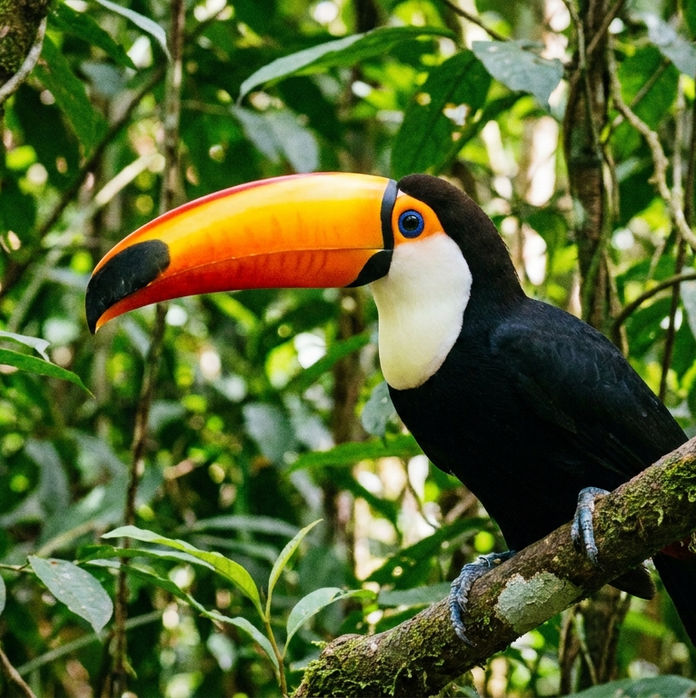
With their large beaks and contrasting colors, toucans are among the most visible birds in Brazilian wildlife. They actively participate in seed dispersal and thus contribute to forest regeneration, while offering spectacular observation scenes at sunrise and sunset.
Caimans: essential predators of wetlands
Discreet but omnipresent behavior
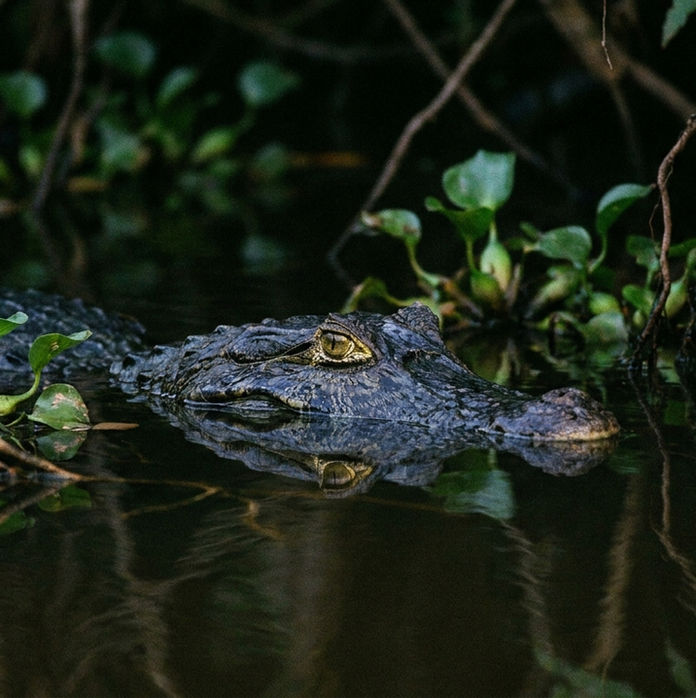
Caimans often allow themselves to be sensed before being seen, with only their eyes protruding above the water's surface. Found in most rivers, lakes, and marshes, they play a vital role in the balance of aquatic ecosystems, notably by regulating numerous fish and other animal populations.
Amazon and Pantanal: two havens for Brazilian wildlife
Two complementary regions for observation
Amazon and Pantanal offer two different but complementary approaches to Brazilian wildlife, between immersion in the dense forest and vast floodplains where visibility is more open.
Region | Wildlife observation atmosphere |
Amazon around Manaus | Exploration by dugout canoe or on foot in the heart of the rainforest, along small streams and large rivers, with fauna that is often discreet but omnipresent. |
Pantanal | Large floodplains and open lagoons, ideal for spotting capybaras, caimans and a multitude of water birds in the distance. |
Tips for observing wildlife
Adopt a respectful and patient approach
Observing Brazilian wildlife is always done with respect for the animals and the local people. Walking in silence, following the recommendations of your local guide, avoiding bright lights, and maintaining a safe distance allow you to see the animals better and limit your impact on their behavior.

FAQ
What is the best season for wildlife viewing?
Depending on the region, certain periods are easier for observing animals, for example when water levels drop and concentrate wildlife around rivers and lagoons. On site, your guide will adapt the outings according to the current conditions.
Is it necessary to have specialized equipment?
Compact binoculars and comfortable, neutral-colored clothing are sufficient for most excursions. The lodge may sometimes provide additional equipment, and your guide will help you spot the more elusive animals.
How to observe wildlife safely?
Safety relies primarily on following the instructions given by your guide: do not feed the animals, do not approach the riverbanks without permission, and stay together during nighttime excursions. These simple steps guarantee a peaceful experience for both you and the wildlife.
Capybaras, toucans, and caimans embody much of the magic of Brazilian wildlife: from the peaceful rodents of the riverbanks to the colorful birds of the canopy, and the silent predators of the calm waters. From a lodge in the heart of the Amazon rainforest, set off to encounter them on an immersive and responsible journey thanks to our lodge stays and to the articles of our blog.


Comments